01
Organizational & Process Architecture
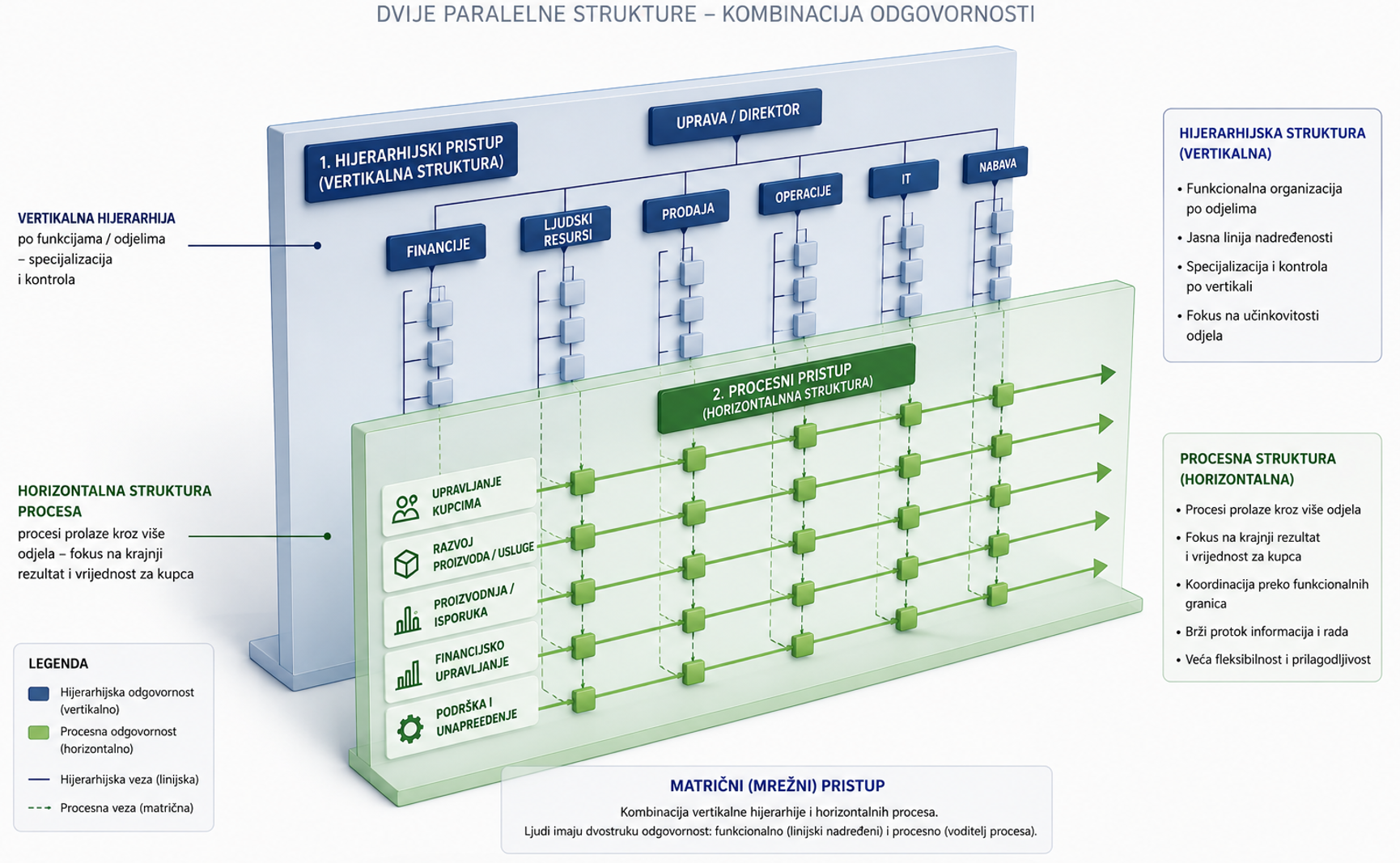
Establish the management architecture by integrating hierarchy, process architecture, ownership, responsibilities and governance structure.
- Who is responsible?
- Who owns the process?
- Who executes the activity?
- How are departments connected?
02
Strategic Process Mapping
Map business and operational processes at a strategic level to show how value flows through the organization.
- Sales
- Engineering
- Procurement
- Production
- Delivery
- Service
Outcome: Value Creation Map
03
Activity & Documentation Layer
Every activity becomes a managed organizational object with purpose, inputs, outputs, resources, documents, responsibilities, KPI, risks, controls and decisions.
Outcome: Operational Knowledge Model
04
Building Organizational Intelligence
As activities, processes and documentation are modeled, qPanel gradually learns how the organization works by linking people, activities, processes, documents, I/O, decisions, risks and KPI.
Most systems start with data. qPanel starts with understanding.
05
Gates & Control Points
qPanel introduces Gates as management control points for readiness and completion.
- Readiness Gates: Project, Audit, Documentation, Process
- Completion Gates: Approved Document, Completed Validation, Closed NCR, Implemented CAPA
Outcome: Structured organizational control.
06
Continuous Improvement
Once the organizational model is established, real operational events are introduced. The objective is not only to record problems but to improve how the organization operates.
Event→AI Analysis→RCA→NCR→CAPA→Effectiveness Verification→Improvement
07
Change Management
Changes affect activities, processes, documents, risks and KPI. qPanel helps organizations understand what is affected, who is affected, which risks are introduced and which controls must change.
Outcome: Controlled organizational change.
08
Organizational Intelligence
The final stage combines the organizational model, process model, documentation, risks, quality events, KPI and readiness information.
- Expected Organizational Model vs Operational Reality
- Missing responsibilities
- Repeated deviations
- Uncontrolled risks
- Weak process performance
- Readiness gaps
Outcome: AI-supported management decisions.